Ancient Chinese capitals refer collectively to the capital cities of various dynasties or regimes in China. As of October 2016, the "Top Ten Ancient Capitals" recognized by the Ancient Chinese Capital Society include Xi'an, Luoyang, Nanjing,
Xi'an, the ancient capital with the most dynasties and the longest reign, is the starting point of the Silk Road and an important birthplace of Chinese civilization and the Chinese nation. Since ancient times, Xi'an has been known as "Chang'an surrounded by eight rivers". It served as the capital for 13 dynasties, including the Western Zhou, Qin, Western Han, and Tang dynasties, and is thus referred to as the "ancient capital of thirteen dynasties". With a capital history spanning over 1,100 years, Xi'an is the starting point of the Silk Road.
Dynasties with their capitals here: Western Zhou, Qin, Western Han, Xinmang, Eastern Han (Xian Di), Western Jin (Min Di), Former Zhao, Former Qin, Later Qin, Western Wei, Northern Zhou, Sui, Tang, etc., with a cumulative capital establishment of over 1000 years.
Cultural relics: Terra Cotta Warriors, Big Wild Goose Pagoda, Daming Palace Site, Weiyang Palace Site of Chang'an City in the Han Dynasty, etc.
Luoyang
Known as "the premier imperial capital of China", Luoyang has long been reputed as "the eternal imperial capital and the city of peony". Over ten dynasties, including the Xia, Shang, Zhou, Han, Wei, Sui, and Tang, established their capitals here, making it one of the significant birthplaces of Chinese civilization. With a capital history spanning over 1,500 years, it serves as the eastern starting point of the Silk Road.
Dynasties with the city as their capital: Xia, Shang, Eastern Zhou, Eastern Han, Cao Wei, Western Jin, Northern Wei, Sui, Tang (including Wu Zhou), Later Liang, Later Tang, Later Jin, etc., with a total capital duration of nearly a thousand years.
Cultural relics: Longmen Grottoes, White Horse Temple, the ruins of Luoyang City in the Han and Wei dynasties, the Erlitou site, etc.
Beijing
Beijing, historically known as Yanjing and Beiping, served as the ancient capital of five dynasties: Liao, Jin, Yuan, Ming, and Qing, boasting a capital history spanning over 800 years. Today, it stands as the capital of China. The city is home to numerous world-renowned historical sites, such as the Forbidden City, the Great Wall, and the Summer Palace, which bear witness to the changes of dynasties and the passage of time. It is an international metropolis that blends classical charm with modern prosperity.
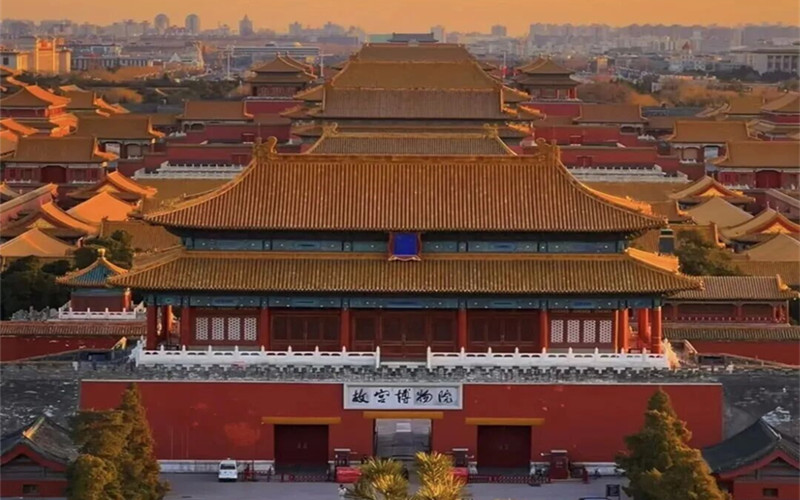
Dynasties with Beijing as their capital: Liao (as a secondary capital), Jin (as Zhongdu), Yuan (as Dadu), Ming, Qing, the Republic of China (in its early stage), and the People's Republic of China, with a cumulative capital history of about 920 years.
Cultural relics: Forbidden City, Great Wall, Summer Palace, Temple of Heaven, Ming Tombs, etc
Nanjing
Nanjing, historically known as Jinling and Jiankang, is renowned as the "ancient capital of six dynasties" and "metropolis of ten dynasties". The Eastern Wu, Eastern Jin, and the Southern dynasties such as Song, Qi, Liang, and Chen all established their capitals here. Nestled between rivers and mountains, it boasts the solemnity of Sun Yat-sen's Mausoleum and the graceful charm of the Qinhuai River. It is an ancient capital that combines a sense of historical weight with the delicacy of Jiangnan.
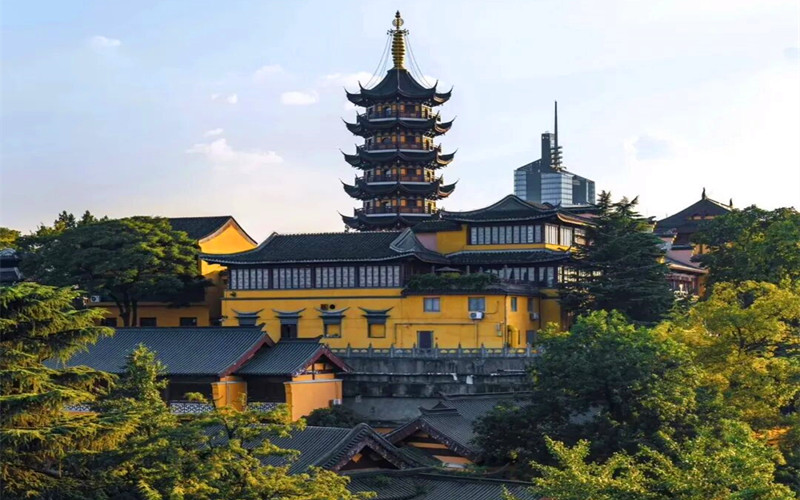
Dynasties with the city as their capital: Eastern Wu, Eastern Jin, Song, Qi, Liang, Chen of the Southern Dynasties, Southern Tang, Ming (early period), Taiping Heavenly Kingdom, Republic of China, etc., with a total of about 440 years as the capital.
Cultural relics: Ming
Xiaoling Mausoleum, Confucius Temple, Sun Yat-sen Mausoleum, Zhonghua Gate, Ming City Wall, etc.


 Ask Questions ?